Showing posts with label Confusing your readers. Show all posts

Friday, April 10, 2015

The Unclear Character

Last time we discussed “the un-set scene”—when a scene is unclear because the author has failed to establish a minimum level of basic details about the setting. Today, we’ll cover a similar problem that can arise with characters: “the unclear character.”

Not all characters will require the same amount of description—sometimes a very basic, even vague, description will suffice, while other times a more thorough amount of detail will be necessary. Tolkien described most of his characters, such as Gandalf and the hobbits, with great precision. Dan Wells, on the other hand, has pointed out that he wrote several books starring his character John Wayne Cleaver without ever telling us what color John’s hair was.

An excellent example of these opposing situations can be found in Twilight by Stephanie Meyer. Her descriptions of her male lead and love interest, Edward, are extremely detailed, which is appropriate in a romance novel aimed at teenage girls. Her descriptions of her protagonist Bella, on the other hand, are generally vague; this allows readers to picture the details of Bella’s appearance however they like, which in turn allows Bella to serve as an audience self-insertion avatar, increasing readers’ involvement in the story and romance.

No matter how much or how little you choose to describe your characters, there are a few basic details that your audience will need to clearly picture your narrative:

Pictured: characters without these basic,
distinguishing characteristics.
Gender: Gender is one of the most basic elements that people use to categorize one another. Whether the gender of your characters is male, female, or something else, it will be helpful to your audience if they know where your characters fit along that spectrum. You don’t want your audience to be picturing a character of one gender only to discover later that they were completely wrong.

Age: Not everyone acts their age. Some children are unusually mature, while a disturbing amount of adults never quite seem to grow out teenage behavior. This is part of the reason that it is important to make clear what the ages of your characters are early on. I’ve read many stories where the protagonist’s behavior led me to believe that they were a child, only for me to discover later that they were supposed to be an adult.

Unusual aspects of appearance: I once read a story written in third-person limited perspective from the point of view of an old man. It was four pages before the author mentioned, out of nowhere, that the old man had a peg leg. That’s the sort of thing that would be a large part of a person’s life, don’t you think? It’s the sort of thing that should be apparent from very early on in the story. Don’t drop major details about a character’s appearance late in the story.

Species: This is basically the same as "unusual aspects of appearance," but it's worthy of extra note. If a character is not a human being, you should generally make that clear up front.

That’s pretty much it. You can give more detail, of course (and usually you should), but you shouldn’t generally give less than this.


Note: These rules apply particularly to perspective characters. If we’re in a character’s head, we should know what they know, including details about themselves. If you want to hide details about a non-perspective character for later on, however, you can usually do so. 

Friday, April 3, 2015

Narrative Gaps: Vehicles and Movement

Remember narrative gaps? These are points in the story where something is left out—perhaps a character does something a second time that they never did a first time or a character remembers learning information that the author forgot to have them learn before. Narrative gaps are one of the primary reasons most authors have alpha and beta readers—because after you’ve gone through your own book a dozen times, it can be difficult to spot errors on your own.

There is one type of common narrative gap that you can look for on your own, however: gaps regarding vehicles.

For some reason, vehicles in stories attract narrative gaps like a shiny clean car attracts bird droppings. They usually go something like this:

     “I think this is the place,” Afonso said, pointing out the window to a ramshackle nightclub.
     Graciana slowed the car enough to make out the small sign over the door. “Gaspar’s Place? Are you sure?”
     Afonso shrugged. “It’s the only club we’ve seen in the area. We might as well check it out.”
     “I guess,” Graciana said. “Just don’t wander off and leave me alone in there, okay?”
     “Deal,” Afonso said as they headed inside.

See the problem? Graciana and Afonso are in a car; he points out the window, she slows the car down, and then suddenly they’re headed into the club. Unless they’re driving the car through the door, that means they had to have stopped the car and gotten out at some point—but that point was never shown.

This might not seem like a problem; your readers are certainly intelligent enough to figure out that the characters are no longer in the car if they’re going into the club, after all. But most people picture the scene they’re reading in their mind, and there are few things as jarring for readers as having their image of the scene they’re reading suddenly violated. It will knock most readers solidly out of the story.

This rule applies even to someone who can literally teleport to place to place; you still need to inform your readers when your scene changes.
Another vehicle-related error occurs when characters move in ways that they should not be able to, usually because the author added something in at some point and forgot the scene was taking place in a vehicle:

     Graciana slowed the car as they passed the store. “Can we stop and buy those shoes I wanted?”
     “We’re kind of in a hurry, dear,” Afonso said.
     “I’ll be quick, I promise. Please?”
     Afonso sighed. “Fine. Hurry.”
     “Thank you!” Graciana said with a laugh. She clapped, jumping up and down like a little girl.

Most people are much too large to jump up and down in a car, wouldn’t you say? Particularly when they’re driving.


The good thing about these errors is that they can be easier than most narrative gaps to track down. Simply look for any section of your story where your characters are in or on any sort of vehicle—from cars to bicycles to horses—and double-check for these errors. 

Note: These errors can occur with any sort of movement from one place to another or any sort of enclosed space. Don’t have your characters walking down the street and then suddenly have them talking to a shopkeeper in a store without having them first enter the store, and don't have your characters crouched in a three-foot high tunnel and then have someone start jumping.

Wednesday, March 18, 2015

Identifying Sentence Fragments

I was browsing through my old posts this morning and was surprised to find that I haven’t written about sentence fragments before. So let’s dive back into the basics of what makes up a sentence: a subject, a verb, and (often) a direct object.

     Mary-Anne    devoured    her sandwich.
        Subject           Verb        Direct Object

The subject of the sentence is the thing that is performing an action. The verb is the action that is being performed. The direct object is the thing that is being acted upon—the thing that the verb is affecting. Not all verbs require a direct object.

     Nathaniel    ran.
       Subject     Verb      (no direct object needed)

No matter how much additional information you add, the heart of your sentence will always be a subject, a verb, and a potential direct object.

     Every morning before work, Mary-Anne jogged around the park.
                Additional Info               Subject     Verb        Add. Info 

     Nathaniel loves peanuts on his ice cream sundaes.
       Subject   Verb   D.O.            Add. Info

If a sentence does not have that central subject and verb, then it isn’t a sentence—it’s a sentence fragment.

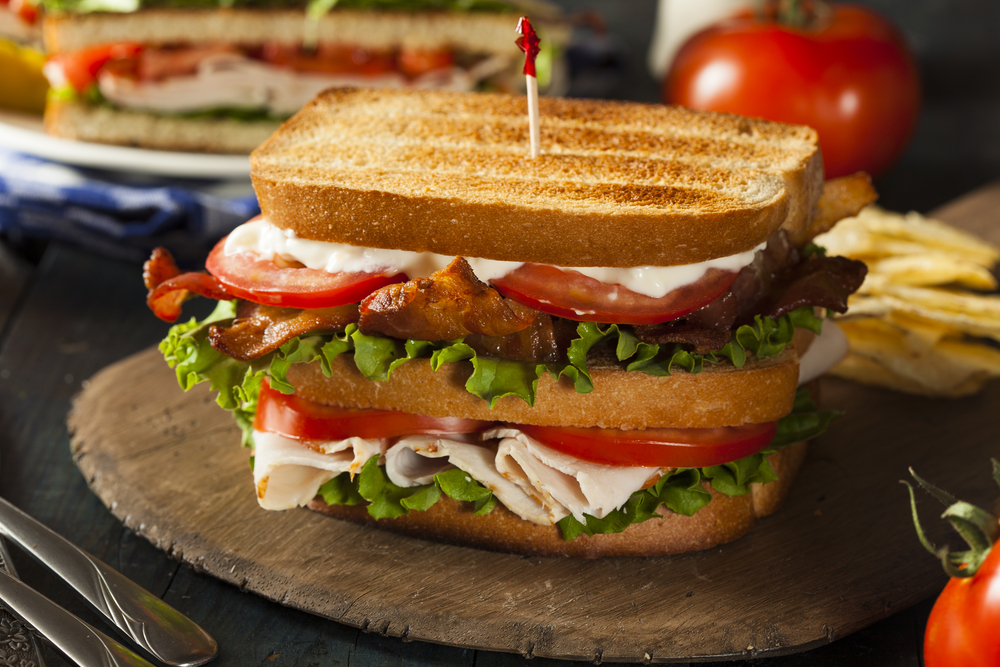
The subject and verb of a sentence are like the bread in a sandwich; take them away, and you no longer have a sandwich, you have a salad. Or worse, a KFC Double Down.


     Mary-Anne looked around the dusty old room. Light from the window fell upon an open jewelry box sitting on the shelf, full of tarnished old jewelry. Dirty emerald bracelets and ragged pearl necklaces.

The first sentence of that example has both a subject and a verb: Mary-Anne and looked, respectively. The second sentence has them as well: Light and fell. The third sentence, however, is a fragment—it has nouns that could serve as subjects, but it has no verb.

The problem with sentence fragments is they technically have no meaning—they can impart scant amounts of information, but they don’t tell readers what to do with it. Imagine helping a friend clean their house; you arrive, they hand you a bucket of paint and a brush, and then they walk off without explaining what they wanted you to do with the paint. Do you paint the room you’re in? Another room? The exterior of the house? Did they just want you to put the can of paint away?

Sentence fragments create a similar sense of confusion on a smaller scale. They can throw your readers out of the story, which is rarely desirable.

Now, sentence fragments aren’t always bad. Think about the way you think—it’s not always in complete sentences, is it? Sentence fragments can be a useful method for mimicking the way people think and perceive the world. For instance:

     I sniffed the air, trying to identify the familiar scent. Pickles? Why did my office smell like pickles?

In that example, Pickles? is a sentence fragment. Since it mimics the way humans think, it is easy and natural to follow the author’s intended meaning. This is a useful fragment.


In the future we may delve more deeply into sentence fragments and what makes them work or not work. For now, my advice is to avoid them. They can be occasionally useful, but their detriments tend to outweigh their usefulness unless you really know what you’re doing. More often than not, you’re better off using full sentences.

Wednesday, March 4, 2015

Tense Overview: Past vs. Present

Quite a while ago, I did an overview of the different forms of perspective and tense in which stories are commonly written. Since that time, I’ve done more in-depth looks at each type of perspective and have gone over numerous perspective errors. But what about tense? I never got around to returning to that topic, so let’s do that today.

There are two primary tenses from which stories are written: past and present.

There's a reason "Future" isn't checked: unless you have an amazingly good reason for it, you shouldn't bother trying to write a story in future tense.

I mean it.

Don't.


Past Tense

Past tense is the most common form of tense in fiction. Stories written past tense are being told as though they have already happened and are being related to the reader after the fact, whether by a character in the story, an omniscient narrator, or an implied, invisible narrator.  Here’s some examples.

     When he was nearly thirteen, my brother Jem got his arm badly broken at the elbow. When it healed, and Jem’s fears of never being able to play football were assuaged, he was seldom self-conscious about his injury. His left arm was somewhat shorter than his right; when he stood or walked, the back of his hand was at right angles to his body, his thumb parallel to his thigh. He couldn’t have cared less, so long as he could pass and punt. (from To Kill a Mockingbird by Harper Lee)

     “Good evening,” said Lucy. But the Faun was so busy picking up its parcels that at first it did not reply. When it had finished it made her a little bow.
     “Good evening, good evening,” said the Faun. “Excuse me—I don’t want to be inquisitive—but should I be right in thinking that you are a Daughter of Eve?”
     “My name’s Lucy,” said she, not quite understanding him.
     (from The Lion, the Witch, and the Wardrobe by C.S. Lewis)

Advantages of Past Tense

It’s common and familiar: Most stories by far are written in past tense, which means most readers are accustomed to reading it. Past tense presents no barriers to them; anyone can pick up the book and get straight to important things like plot and character. With present tense, on the other hand, readers can often get irritated or confused because the tense feels unfamiliar and foreign. Odds are that the more reading your readers have done, the less they will like present tense.

Believability: Part of the difficulty of present tense is that it is unrealistic—is this character standing here narrating to someone while events happen? Is there some sort of chip in their brain translating their thoughts into diary entries? Past tense, on the other hand, uses a perfectly common convention—that of someone telling the story of something that once happened. “I went to the store this morning, but they were out of the bread I like.” That’s a past tense story that you might hear any day.


Present Tense

Stories written in the present tense are told as though they are currently happening. The most well-known example of this is probably The Hunger Games by Suzanne Collins:

     “Look what I shot.” Gale holds up a loaf of bread with an arrow stuck in it, and I laugh. It’s real bakery bread, not the flat, dense loaves we make from our grain rations. I take it in my hands, pull out the arrow, and hold the puncture in the crust to my nose, inhaling the fragrance that makes my mouth flood with saliva. Fine bread like this is for special occasions.
     “Mm, still warm,” I say. He must have been at the bakery at the crack of dawn to trade for it. “What did it cost you?”
     “Just a squirrel. Think the old man was feeling sentimental this morning,” says Gale. “Even wished me luck."

Advantages of Present Tense

Immediacy: Stories told in the past tense tend to have a reflective nature, since the narrator presumably knows the whole story and is now telling it from a position of comfort and safety. Present tense stories, however, give the impression that not even the narrator knows what will happen next—readers are seeing everything as it happens, so anything could happen!

Easy flashbacks: In a present tense story, it can be very easy for your readers to keep track of the when of the story if you flash back to earlier events—the majority of the story will be told in present tense, and flashbacks will be told in past tense. Easy to see and follow. In past tense, however, it can be difficult to tell when the author jumps backwards or forward in time. Everything will either sound the same, or the author will be forced to dive into awkward past perfect continuous sense—a complete mess of a task for someone who doesn’t know what they’re doing.


In the future, we’ll take a look at some of the ways that tense errors can crop up in your writing.

Monday, March 2, 2015

Pronoun Confusion, Part Three

Again with the pronouns. And again with the quick review:

Pronoun: a word that stands in for a noun or noun phrase. We’ve focused on proper pronouns such as he, she, it, we, and they as well as possessive pronouns such as his, her, its, our, or their.

Antecedent: the word that the pronoun replaces. Tamara could be the antecedent to she, for instance, or the magicians’ could be the antecedent to their.

We’ve discussed how important it is to ensure that it’sclear which noun is the antecedent to each pronoun you use. There are few things as confusing to a reader as not knowing which of your female cast members you’re referring to when you say she.

One of the most common causes of confusion in regards to pronouns and antecedents is an old, oft-ignored rule: a possessive noun cannot function as an antecedent. Here’s an example of this rule being broken:

     Violet’s eyes were always downcast because she was so afraid of confrontation.

In that example, she is the pronoun, and it is clear that the she being spoken of is Violet. The only problem is that the word Violet never appeared in the sentence—the word Violet’s did. Why does that matter? Well, because pronouns take the place of nouns, and Violet’s isn’t actually a noun. It’s an adjective describing eyes, the actual noun and subject of the sentence. So technically, the pronoun she is referring back to a noun that doesn’t exist. It’s a problem called a possessive antecedent.

Now, I called this a “problem,” but the fact of the matter is that this is extremely common in both written and spoken English. Everyone does this at some point or another, sometimes very frequently. The reason this error is so common is that it isn’t confusing—look back at that example sentence again. When you read it, were you ever confused about who she referred to? No. You knew that she meant “Violet.”

So while that sentence is technically grammatically incorrect, it’s not that big of a problem. If I were your editor, I would make you fix this sort of error, but many editors probably wouldn’t care about it. You can fix these if you want to go the extra mile.

However. There are two situations where the possessive antecedent should always be fixed. The first is when there is another possible antecedent in the sentence with it:

     Gregorii plunged the knife into Pavel’s leg, making him grunt.

This is similar to the problem we discussed in part one of this pronoun series—if there are two subjects in one sentence to whom the pronoun could refer, your readers can’t be positive which subject you meant. In the example above, it’s pretty clear that Pavel is the one grunting; but grammatically speaking, the only noun in the sentence is Gregorii. Try to avoid this situation. Here is a revised version:

     Gregorii plunged the knife into Pavel’s leg and twisted it viciously. Pavel merely grunted.


The second situation is when the possessive you're referring back to is describing a noun that could also be described by the pronoun. For instance:

     Terrel's son was happy and well-adjusted because he was such a great dad.

Who is he? Is Terrel's son happy because Terrel is a great dad? Because this sentence actually says that Terrel's son is happy because he is a great father to his own, unmentioned son (Terrel's grandson).

The sentence is so vague that it could imply either of these situations. Writers should be more precise than that.

If you wanted to convey that Terrel was the great dad, then you need to rephrase the sentence to something like this:

     Terrel was a great dad, so his son was happy and well-adjusted.


For more information on pronouns and the confusion they can cause, check out Part One and Part Two of this series.

Friday, February 27, 2015

Pronoun Confusion, Part Two

Earlier this week, we discussed pronouns and unclear antecedents. Today I’d like to show you another way that pronouns can cause trouble, a problem I like to call the “antecedent switch.”

Now, quick review—a pronoun is a word that stands in for a noun or noun phrase, such as he, she, they, or I. An antecedent is the noun or noun phrase that the pronoun replaces:

     Joseph knew all the answers to the test because he had studied.
(Antecedent)                                                      (Pronoun)

Pronouns are simple enough to use when you only have one character in a scene to whom each of them can apply. For instance, if your scene features one man and one woman and no other characters, then you’ll always know who the pronoun he refers to and who the pronoun she refers to. But if your scene features two women and two men, then it will suddenly become a little trickier to keep track of who is he and who is she.


You should probably hold off on your novelization of 12 Angry Men until you're absolutely certain that you've mastered your clear pronoun usage.


A good rule of thumb is that a pronoun will generally refer back to the last applicable antecedent. For example:

     Sophia hated the color green because she had spent years trying to get grass stains out clothing. Mary, on the other hand, loved the color green because she loved the outdoors.

In the first sentence, the pronoun she refers to Sophia. In the next sentence, however, the exact same pronoun refers to Mary instead. This is acceptable prose because Mary was the most recent possible antecedent in the second sentence.

There is a very strong exception to this rule, however: do not switch antecedents in the middle of the sentence. For example:

     Sophia finished reading. She handed the book to Mary so that she could read the passage too.

At the beginning of the second sentence, she referred to Sophia. Later in the same sentence, it referred to Mary. This is a no-no. Do not use the same pronoun twice (or more) in one sentence to refer to two (or more) different antecedents. If you want to use your pronoun in place of a new antecedent, then you should either begin a new sentence or re-word your original passage to remove one of the pronouns.

     Sophia finished reading and handed the book to Mary so that she could read the passage too.

Bam. No antecedent switch in the middle of the sentence; there is only one pronoun, and it is clear what its antecedent is.


So that’s a solid rule to help you keep your pronoun usage clear. Plus, while writing this post I came up with about three other pronoun problems that I’ll want to mention, so look out for plenty more on this topic in the future.

Wednesday, February 18, 2015

Punctuation Problems: "While" and the Comma

A few months ago we discussed how a single comma can change the meaning of a sentence. But commas are more versatile than that; they can also change the meaning of specific words, simply by being placed nearby. For instance, the word while:

     We’ll go to the theatre while you watch the baby.

     I am a doctor of medicine, while you are simply a quack.

See that? In the first example, while meant “during the time that” and was not preceded by a comma. In the second example, it meant “whereas” and was preceded by a comma.

Now, it’s technically not the comma that changes the meaning of while. But that comma will pretty much always follow this pattern. If you’re using while to mean whereas, then it should be preceded by the comma; if you’re using it to mark a period of time, then there shouldn’t be a comma.

What I’m saying here is that editors don’t want to see this:

     He’s throwing a party, while his parents are out of town.

This happens all over the place, and it is incorrect. Resist the impulse to place a comma before a while that’s supposed to indicate a duration of time. Just don’t do it.

The problem with this error is that it still creates a grammatically valid sentence. A normal grammatical error just says something poorly, but at least it’s usually still what the writer meant to say. This error, on the other hand, completely changed the meaning of the sentence from this:

     He’s throwing a party during the period of time that his parents are out of town.

To this:

     He’s throwing a party; his parents, on the other hand, are out of town.

See the problem here? If you’re a writer, someone who makes a living (or wants to make a living) purely by the words you string together, then you need to know how to make those words say exactly what you intend them to. So remember:


Note: When while is being used to indicate a period of time, it is usually possible to switch the order of the sentence’s clauses like this:

     While his parents are out of town, he’s throwing a party.


In this case, you will need a comma between the two parts of the sentence, but not beside while.

Monday, February 16, 2015

Pitfalls of Multiple Viewpoints

Last time, we discussed some of the ways that including multiple perspective characters in your story can serve the needs of the narrative. Today, I'd like to highlight some of the difficulties and pitfalls that you should consider before you start breaking out new perspectives all over the place.

The audience can lose track of characters and plotlines

Generally speaking, the more perspective characters you have in a story, the more plotlines and side characters you will need to flesh out the narrative. This is a difficulty that can quickly spiral out of control. I recently read a manuscript which dropped fourteen viewpoint characters on me in the space of thirty chapters. That is a lot of viewpoints and characters to keep track of, especially when you only get an occasional chapter here and there with each character. I can tell you the names of about half of the viewpoint characters, the occupations of most of the others, and almost nothing about anyone else.

Now, if I really buckled down and focused, I could probably remember most of the names of the other perspective characters. I could painstakingly map out each plotline in my head to be sure that I understood where things were going. But the trouble is that I just don't care enough to do so. The more work it is to follow a story, the more entertaining that story will have to be to pull readers along; and most of them just can't live up to it.

The audience will almost certainly end up disliking certain plotlines or viewpoint characters

Juxtaposition invites comparison.

Go ahead. Just try not to notice any differences.

If you place two portraits side by side, viewers will automatically begin to compare them. If you write a re-telling of Sleeping Beauty, then readers will instinctively compare it to every other version of the story that they've experienced.

The same thing happens with multiple perspectives and plotlines in a story. If you jump from perspective to perspective, readers will begin to compare those perspectives and will almost always end up enjoying or disliking one more than the others. They will begin to resent having to leave their favorite plotline or character to spend time on one that they don't like as much or even actively dislike. In the manuscript I mentioned before, I encountered this problem. Of the fourteen viewpoints I'd been given, I was really engaged by only three or four of them. Perhaps eight or nine of the others felt merely adequate by comparison, and the remaining ones I actively dreaded returning to. If the amount of entertaining story is too severely overwhelmed by boring or unpleasant, many readers will simply set the book aside.

Lack of variety

Many viewpoint characters tend to be something of a blank slate, a "normal" person that the audience can relate to (or project themselves upon) in a sea of distinctive side characters. Harry Potter, for instance, can often come across this way. When compared to the intelligent and bossy Hermione, the sardonic and insecure Ron, the bombastic and friendly Hagrid, and so on, Harry is comparatively low-key. He is interesting mainly as a lens through whom we can view the world and as a vehicle to carry us through exciting adventures, but no so much for his unique or compelling personality. And this isn't a bad thing; a protagonist that your audience can easily relate to or project themselves upon can be a powerful tool.

However, if you have multiple perspective characters in a single story, it can be very easy for them all to fall into this same rut. If you have four viewpoint characters who all have this same, easy to relate to/project upon personality, the story will get boring very quickly. Characters need to interesting and distinct from one another, whether they're side characters or protagonists.

Character knowledge vs. audience knowledge

Unless your perspective characters are all getting together to share their experiences and knowledge every time you switch the viewpoint, you will almost certainly have some characters who know things that the others don't. Your readers and you the author, on the other hand, know everything that any of the characters have learned at any given point. I have read many stories where knowledge began to bleed from one character to another even though they had never had an opportunity to share information. You have to keep track of which character knows what and how they know it; don't just lazily let the audience's knowledge inform the characters.

This also includes keeping track of which characters are acquainted and which aren't. Just because your audience is already familiar with a character doesn't mean the other protagonists are.

Pacing Problems

Time is one of the most difficult problems of multiple-perspective stories. In the manuscript I mentioned earlier, one of my favorite plotlines was left with two characters in a rather dire situation. The narrative then followed five or so other characters through a variety of situations, including some plotlines that would have taken several days to play out. The narrative then returned to those two characters . . . mere moments after we'd last seen them. I was confused and irritated. If we were just going to come back to these characters in the same scene, the same minute where we'd last seen them, then why did we ever leave them? Days had passed for other characters while seconds had passed for these.

Even more difficult to write and to keep track of as a reader is concurrent action, when two plotlines are occurring at the same time. This can be very difficult to convey, which is why some of the best writers of multiple-perspective stories carefully craft the plot so that no concurrent action takes place. If you leave character A to spend five minutes with character B, then five or more minutes will have passed when you return to character A again.

There are two reasons why this is important. First, if readers get too confused, then they might get irritated with the story or simply set the book aside. Second, there are few things that feel as cheap and deceptive as leaving characters in a tricky situation only to have them get rescued by a character who logically should have been somewhere else. If you make too many mistakes with the time and pacing of your story, you run the risk of seeming dishonest and leaving your readers feeling cheated.


Now, none of this is to say that you shouldn't write multiple-perspective stories. Just keep in mind the difficulties before you start. Don't be afraid to set aside a more complex, multi-viewpointed story in favor of a simpler story with fewer viewpoints that is more within the realm of your skills. Then, once you've had some practice, come back to the more complicated story. Better to wait and do a good story justice than to botch it because you weren't ready.

Monday, February 2, 2015

Metaphor and the Beginnings of Stories

Beginning a story can be a tricky thing. There’s a lot of information that you need to get across to your readers right away if they’re going to understand what’s going on: who the main character is, what their personality is like, where they are, what they’re doing, etc. And if you’re writing speculative fiction (fantasy, science fiction, horror, etc.) it gets even worse—you’ll probably have to introduce an entirely new world to your readers, complete with fantastic magic or technology, strange aliens or monstrous creatures, and imagined cultures with centuries or more of history.

That is a lot to get across to a reader, and deciding where to begin can be daunting. What can you show the readers that will be interesting and engaging without being so foreign as to be completely beyond understanding? What major elements of character and setting need to be given right away, and which need to be introduced slowly and subtly over time?

Sadly, I’m not here to answer all those questions for you. Maybe someday we’ll dive further into those topics, but this blog is for discussing errors that crop up in prose, not in plotting or content. So today I’d like to highlight a common prose mistake that many writers make in the beginning of their stories: the overuse of metaphors.

Most of you probably remember the simple definitions of simile and metaphor that you’ve been told since elementary school: a simile is describing one thing as being like something else, while a metaphor is describing a thing by saying it is something else even though you don’t literally mean it.

     Simile: The castle loomed over the town like an overprotective mother watching to make sure her children were playing safely.

     Metaphor: The train was a powerful, serpentine dragon winding through the hills, belching smoke from its great mouth.

Simple enough, right? Now I myself am not much of a metaphor man. I’ve heard a lot of talk about the poetic capabilities of metaphor and all that, but at the end of the day I tend to rely much more heavily on similes. If you’re a metaphor fan, then hey—more power to you. Just watch out to make sure you don’t pile up a lot of metaphors at the beginning of your story.

Why? Well, because at the beginning of your story, you haven’t been able to give all of that background we discussed earlier—all of the character, plot, personality, history, culture, setting, or explanation of various fantastical elements that your story might hold. And without all of that background, your readers won’t have any frame of reference to determine whether you are being metaphorical or literal.

For example, here’s the beginning of a story:

     Kalateia stood on the ridge surveying the dusty, bloody remnants of the battlefield. Corpses were strewn throughout the valley below, from mountain slope to mountain slope—her soldiers, the enemy’s soldiers, and hundreds of innocent civilians who’d had the misfortune to live in the valley where the two armies had met. Spider-like gravewagons crawled over the field, harvesting up bodies for use in future battles. The heavy corpses were difficult to gather, zombies clinging to the soil and to one another in a futile attempt to avoid the claws of the gravewagons.

So here’s the five-hundred-and-twenty-three-dollar question: are the corpses literal zombies or not? Are these “gravewagons” gathering up dead bodies that are simply trampled down into the blood-muddied soil and therefore seem to cling to the ground like strange zombies, or are those corpses literally undead and holding on to the ground and each other in an attempt to avoid being harvested? Without additional context, you can’t be absolutely certain, can you?

Even if you’re not writing speculative fiction, metaphors can be confusing at the beginning of a story. They can give your readers a moment where they’re knocked out of the story, where they stop to wonder, “wait, did I pick up a fantasy novel by mistake? What is this?” Sometimes it’s only a moment of confusion, sometimes it can be a few paragraphs or even several pages before they can be sure that you were being metaphorical. Either way, the last thing that you want to do during the first few pages of your story is introduce bumps into an already-steep learning curve. Beginnings are confusing enough—don’t add even more confusion!

You might think that your metaphor is clearly not meant to be taken literally, that there is no way someone could think you actually meant what you said. Something like:

     The bus moved through the field with surprising grace, a bulky cat carrying passengers to destinations unknown.

No one could take that literally, right?


Wrong.


There is almost no metaphor so outlandish that it will be clear to everyone that it’s not literal. So ease up on your metaphor usage until you’ve given your readers time to get some context.


P.S.
There won't be any new posts for Wednesday and Friday this week, as I'll be busy at the Superstars Writing Seminar! Regular updates will resume on the 9th.